In this Aestura Atobarrier 365 Cream review, anyone who has spent time on Reddit’s r/AsianBeauty or Skincare TikTok knows the golden rule when a moisture barrier collapses from tretinoin or harsh acids: “Drop everything and get this cream.”
Born from Korean pharmaceutical research and long prescribed across Seoul’s top dermatology clinics, Aestura isn’t just another hydrating moisturizer—it is treated like an emergency room treatment for compromised, peeling skin.
Yet, recent chatter across skincare forums sparked collective panic: Did the reformulation ruin this holy grail? Is it safe for acne-prone skin? And how does it actually compare to Western staples like La Roche-Posay Cicaplast B5+?
As a Seoul-based beauty editor testing formulas straight from local shelves, here is an unfiltered, science-backed breakdown of the reformulated Aestura Atobarrier 365 Cream.
Editor’s Quick Verdict
- Best For: Severely compromised barriers, retinoid peeling, dry-to-normal skin.
- Texture: Rich melting balm with patented DermaON® ceramide capsules.
- The Catch: Richer lipid concentration may feel heavy on oily skin; not fungal acne-safe.
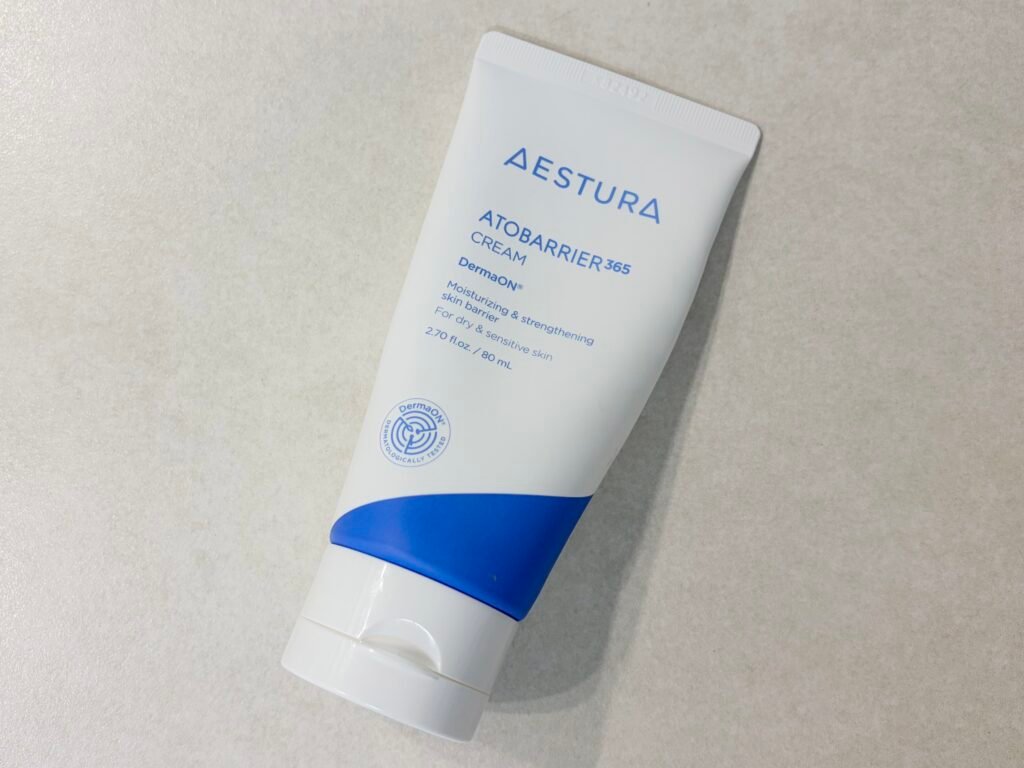
The iconic clinical tube: Aestura’s reformulated Atobarrier 365 Cream straight from Olive Young.
In This Guide
What Makes Aestura Different? The 2:4:1 Lipid Architecture
To understand why this cream outperforms ordinary moisturizers, you have to look at the biology of real skin.
Your moisture barrier doesn’t thrive on ceramides alone. It requires a balanced physiological matrix of Ceramides, Cholesterol, and Fatty Acids. Aestura formulates this bio-identical lipid sandwich in a clinically optimized ratio designed to closely mimic human stratum corneum intercellular lipids.
- 🔬 DermaON® Micro-Capsule Technology: Squeeze the tube, and you will notice tiny white beads suspended throughout the texture. These are patented micro-ceramide capsules engineered to stabilize high lipid concentrations without degrading.
- 💧 Melt-On Contact: The beads do not scratch. The second they meet your skin’s ambient body heat, they dissolve seamlessly, sealing microscopic micro-tears in the barrier.
- ⏳ 120-Hour Hydration: Rather than sitting as a heavy, suffocating sheet of petrolatum, clinical tests prove it locks moisture deep within cellular gaps for up to 120 hours.
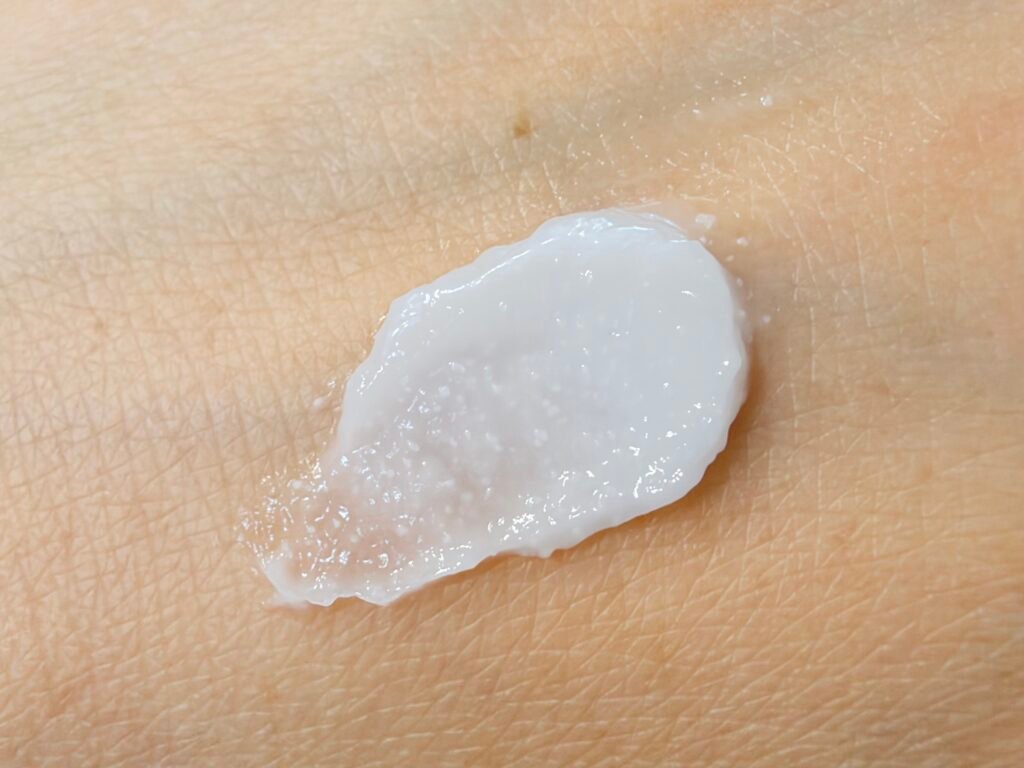
Visible DermaON® micro-capsules: patented ceramide beads that melt on contact with skin warmth.
The Elephant in the Room: The Reformulation Truth
When Aestura updated its formula, long-time devotees were terrified. Why touch perfection?
- What Actually Changed? The brand boosted active ceramide density to a higher clinical concentration, refined the capsule matrix for faster melting, and eliminated waxy fillers for a smoother daily feel.
- The Sensitivity Debate: If you experienced sudden closed comedones or minor breakouts with the reformulated version, the cause isn’t harsh chemicals—it is higher lipid concentration. Aestura significantly boosted active ceramide density to reinforce long-term barrier repair. However, for acne-prone or congestion-prone complexions, this richer lipid saturation can overwhelm active sebum glands if over-applied.
- The Seoul Verdict: For compromised barrier reconstruction, the new formula is undeniably superior. The DermaON® capsules liquefy noticeably faster than the vintage version, leaving behind zero waxy drag.
The Showdown: Aestura Atobarrier 365 vs. La Roche-Posay Cicaplast Baume B5+
Having both tubes sitting on my vanity, they tackle barrier emergencies in completely different ways. (For a deep dive into layering them without clogging pores, read our Aestura vs Cicaplast comparison in the Korean Moisture Sandwich Method):
- Aestura Atobarrier 365 Cream (The Lipid Mimic): Instead of forming an occlusive barrier mask, the DermaON® capsules melt directly into micro-cracks. You get immediate bounce, a translucent ‘glass-skin’ finish, and zero chalkiness.
- La Roche-Posay Cicaplast B5+ (The Heavy Zinc Bandage): Functions like a thick, physical zinc paste. Its high panthenol and zinc content is unbeatable for soothing raw, burning patches, but it leaves a chalky white cast and a semi-matte film that notoriously pills under morning sunscreen.
- Aestura Atobarrier 365 Cream = Deep physiological lipid barrier that melts seamlessly under daily SPF and makeup, leaving a natural glass-skin glow without pilling (AM/PM use).
- La Roche-Posay Cicaplast B5+ = Thick zinc rescue paste for acute, stinging dry spots (PM use).
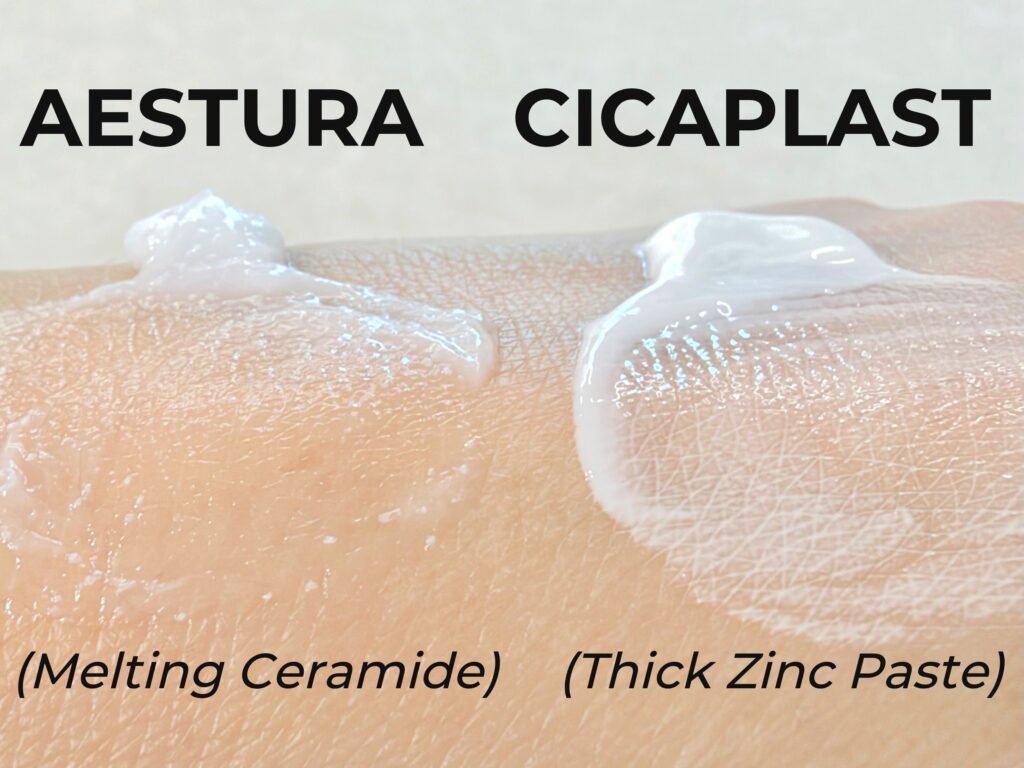
Side-by-side texture test: Aestura’s melting ceramide cream (left) vs. La Roche-Posay’s thick zinc paste (right).
Cream vs. Lotion: Which One Do You Need?
| Feature | Atobarrier 365 Cream | Atobarrier 365 Lotion |
|---|---|---|
| Texture | Rich melting balm with visible DermaON® capsules | Fluid, milky emulsion without visible beads |
| Ceramide Density | Maximum concentration (High lipid matrix) | Medium concentration (Hydration-focused) |
| Finish | Dewy, deeply nourishing, protective seal | Semi-matte, breathable velvet slip |
| Best For | Retinoid peeling, severe winter flaking, dry skin | Oily/combination skin, daytime barrier care |
| Under Makeup | Ideal for dry flaky patches (press, don’t rub) | Effortless layering without waiting time |
Editor’s Quick Rule: If basic water stings your face, pick the Cream. If you need an everyday, breathable moisturizer that won’t slip around midday, grab the Lotion.
Honest Downsides: Is It Safe for Acne-Prone Skin?
No barrier treatment works for everyone. Keep these real consumer flags in mind:
- ⚠️ Not Fungal Acne (Malassezia) Safe: The formula contains specific fatty acids and esters that can aggravate fungal acne. If you struggle with stubborn forehead bumps, patch-test first.
- 🛑 T-Zone Congestion on Oily Skin: This is an intensely nourishing formula. If you produce excess sebum, slathering it over oily zones in summer humidity can lead to clogged pores. Apply it strategically to dry areas like cheekbones and smile lines instead.
➔ Editor’s Note: If you are prone to clogged pores when using heavy barrier creams, your cleansing step is likely falling short. Check out my guide on the Olive Young Cleansing Shift & Emulsification Method to clear congested pores before applying rich lipid creams.
Application Hack: How to Stop Pilling
If you wear this under sunscreen or foundation, do not rub it directly over dry patches!
- Warm a nickel-sized amount between your clean palms until the DermaON® beads melt into a smooth, glossy sheen.
- Gently press the melted cream into your face rather than aggressively rubbing.
- Wait 60 seconds to let the lipid layer settle before applying your daily sunscreen or foundation. This creates an ultra-smooth, non-greasy canvas for that coveted Korean glass-skin effect—zero pilling guaranteed. ✨
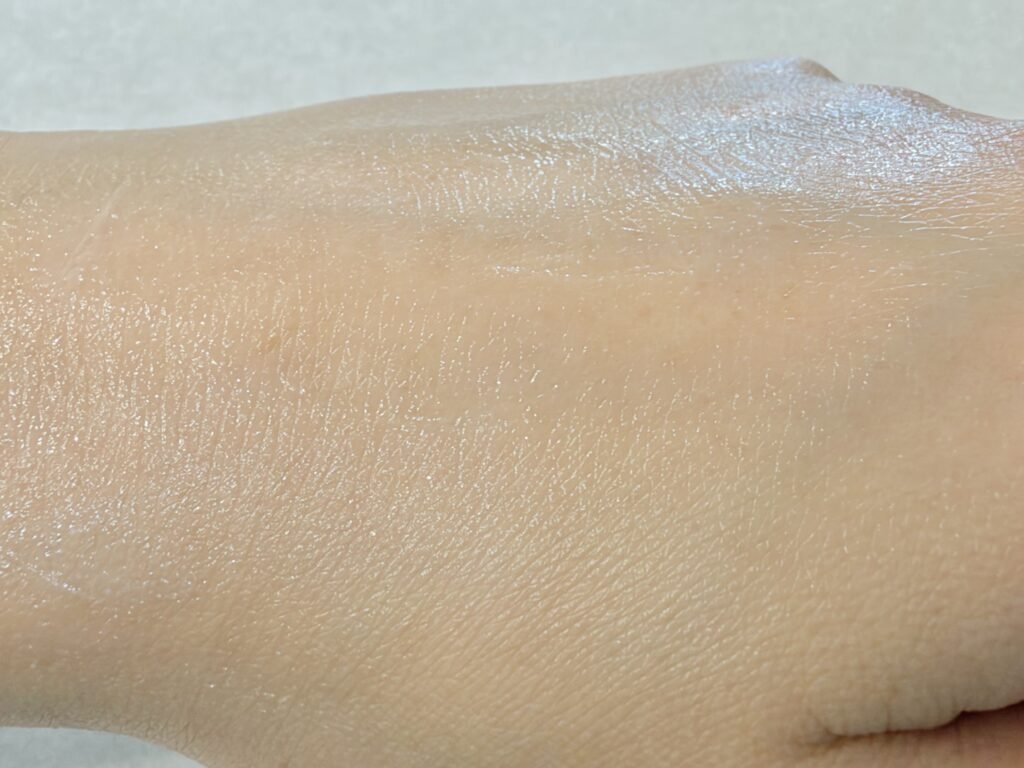
Absorbed within 60 seconds: deep lipid hydration without a suffocating greasy film.
Editor’s Secret Recovery Hack: The Aestura + Cicaplast “Sandwich” Method
Can’t decide between the two? You don’t have to.
When my skin barrier is completely shredded from seasonal shifts or retinoid-induced peeling, here is my holy-grail nighttime recovery sequence:
- Step 1: The Base Lipid Seal 💧: Warm a nickel-sized amount of Aestura Atobarrier 365 Cream between your palms and gently press it across your entire face. Let it settle for 2–3 minutes. This allows the patented DermaON® micro-capsules to dissolve thoroughly and reconstruct the intercellular lipid matrix from deep within.
- Step 2: The Targeted Zinc Bandage 🩹: Instead of slathering heavy occlusives all over—which risks suffocating normal pores—take a pea-sized dot of La Roche-Posay Cicaplast Baume B5+ onto your ring finger. Gently tap a micro-thin layer strictly over high-friction, acute peeling spots: under the delicate eye area, around the nostrils, and along smile lines.
This duo creates an airtight, non-suffocating recovery seal. The Aestura replenishes bio-identical physiological lipids from below, while the Cicaplast acts as a breathable zinc shield on top to soothe stubborn raw spots overnight.
Frequently Asked Questions
Q1. Can you use Aestura Atobarrier 365 Cream and LRP Cicaplast together?
Yes. Aestura replenishes essential intercellular lipids across the whole face, while Cicaplast functions as a targeted zinc bandage. Applying Aestura first and spot-treating peeling patches with Cicaplast creates the ultimate barrier recovery duo.
Q2. Does the reformulated Aestura Atobarrier 365 Cream clog pores?
For dry, normal, and barrier-damaged skin, it does not clog pores because it uses breathable physiological lipids instead of heavy petrolatum. However, because active ceramide concentration was increased, oily or congestion-prone skin should avoid slathering it heavily over the T-zone.
Q3. Is Aestura Atobarrier 365 Cream fungal acne-safe?
No. The formula contains specific fatty acids and esters that can feed Malassezia yeast. If you are actively prone to fungal acne bumps, you should patch-test first or opt for an ester-free barrier gel.
Aestura Atobarrier 365 Cream Review: Worth the Hype?
If your skin is healthy and undisturbed, this cream might feel purely functional. But the moment your moisture barrier collapses from cold wind, active peels, or retinol burnout, the Aestura Atobarrier 365 Cream proves why Seoul dermatologists have trusted it for over a decade. It delivers reliable, clinical-grade skin recovery in a single tube.
Smart Shopping Tip: Always check verified retailers like YesStyle or Olive Young Global for the seasonal ‘1+1 double sets’—they offer the best value straight from Korean warehouse stock.
Have you tested the new Aestura formula yet, or do you plan to try my Aestura + Cicaplast sandwich method tonight? Share your skin rescue routine in the comments below!